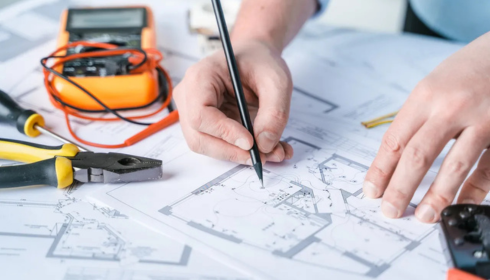
When people walk into a finished commercial building for the first time, they rarely think about what happened months earlier before the walls existed, before cables were installed, or before construction crews even arrived onsite.
They notice the atmosphere instead. Maybe the lighting feels comfortable. The layout makes sense. Equipment works smoothly. The space feels practical without trying too hard.
What most people don’t see is how many important decisions were already made long before the building looked anything like its final version.
And honestly, those early decisions often determine whether a project feels successful years later or becomes a constant source of expensive frustration.
Construction Success Starts Earlier Than People Think
There’s a tendency to associate construction with physical activity — steel beams, concrete trucks, loud machinery, workers moving across busy sites. But in reality, some of the most valuable work happens before any of that begins.
Strong pre-construction planning gives projects structure before the first wall is framed.
That early phase is where teams evaluate budgets, timelines, infrastructure needs, future expansion possibilities, safety considerations, and technical requirements that will affect the building long after construction finishes. It’s also where small overlooked details can quietly grow into major future problems if nobody catches them early.
I once heard a project manager explain that construction delays rarely appear from nowhere. Usually, the warning signs existed much earlier during the planning stage when assumptions were rushed or important conversations never fully happened.
That idea stuck with me because it applies to almost every successful project.
Modern Buildings Depend on Complex Infrastructure
Commercial buildings today carry far heavier demands than buildings were originally designed to handle decades ago.
Offices depend on cloud-connected systems, servers, climate control, and endless charging stations. Restaurants rely on refrigeration, payment systems, automated ordering technology, and kitchen equipment running continuously during busy hours. Warehouses operate with security infrastructure, automation systems, and inventory management tools that simply can’t afford unexpected downtime.
All of that relies heavily on stable electrical systems working quietly in the background.
The challenge is that electrical infrastructure becomes mostly invisible after construction finishes. Once ceilings close and walls are painted, nobody sees the cables, panels, conduits, or distribution systems hidden underneath anymore.
But they absolutely notice when those systems stop functioning properly.
That’s why infrastructure planning matters so much early in the process. Fixing layout problems after occupancy becomes far more expensive and disruptive than addressing them during initial construction.
Good Design Is More Than Appearance
People often think of design purely in visual terms — architecture, colours, furniture, branding, or interior finishes.
But practical functionality is just as important.
Thoughtful design planning shapes how people actually experience a building every day. Lighting placement affects comfort and productivity. Outlet positioning influences workflow. Equipment layouts determine efficiency. Accessibility decisions affect maintenance years later.
Even small choices can create long-term consequences once the building becomes operational.
I remember speaking with a business owner who regretted not adding additional electrical capacity during construction because expanding later disrupted operations for weeks. At the time, the original setup seemed completely sufficient. A few years later, growth changed everything.
That’s the difficult part about infrastructure decisions: future needs rarely look obvious in the beginning.
Flexibility Has Become More Important Than Ever
Buildings today need to adapt faster than they used to.
Technology changes constantly. Businesses expand unexpectedly. Workspaces evolve. Equipment upgrades happen more frequently. What feels modern during construction can become outdated surprisingly quickly if systems weren’t designed with flexibility in mind.
That’s why experienced project teams often focus heavily on scalability during planning phases.
Good infrastructure doesn’t simply support the present moment. It quietly prepares for future changes before anyone fully knows what those changes will be yet.
And honestly, that forward thinking often separates buildings that age gracefully from ones that become frustratingly restrictive only a few years after opening.
Communication Shapes Construction Quality
One thing people outside the industry sometimes underestimate is how collaborative construction projects really are.
Architects, engineers, electricians, contractors, suppliers, inspectors, and project managers all depend heavily on communication to keep projects moving smoothly. One overlooked detail can create delays affecting multiple trades afterward.
That’s why strong coordination matters just as much as technical skill.
When planning teams communicate well early on, problems get solved before they become expensive onsite complications. Systems integrate more naturally. Timelines stay manageable. Unexpected redesigns become less frequent.
And while clients often focus heavily on the final visual result, experienced builders know the quality of the process behind the scenes matters equally.
Reliable Buildings Create Invisible Comfort
There’s something quietly satisfying about buildings that simply work naturally.
The lighting feels comfortable without anyone thinking about it. Equipment operates reliably. Staff move through the space without frustration. Customers don’t encounter unnecessary technical problems. Everything feels smooth and functional almost by accident.
But that reliability rarely happens accidentally.
Usually, it’s the result of thoughtful decisions made long before the building ever opened its doors.
And honestly, that may be the clearest sign of successful construction in the end. Not flashy design trends or dramatic features, but spaces that quietly support everyday life without constantly demanding attention.
Because when buildings are planned properly from the beginning, people inside them rarely stop to think about the infrastructure at all.
They simply trust it to keep working tomorrow.
