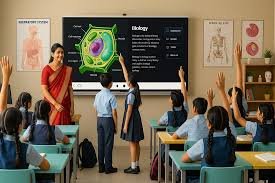
There’s something deeply human about learning. The way a teacher pauses mid-sentence to explain something differently, the moment a concept finally “clicks,” the small encouragement that makes you try again. For years, classrooms have been built around that connection.
And now, quietly but steadily, something new is entering the picture—AI tutors.
Not as a replacement, at least not entirely. More like… a new layer. A different kind of support that doesn’t get tired, doesn’t lose patience, and is always available at 2 AM when a student suddenly decides to revise algebra.
But what does that really mean for the future of education?
The Rise of Always-Available Learning
Let’s start with what AI tutors do well.
They’re consistent. You can ask the same question ten times, and they’ll answer without frustration. For students who feel shy or hesitant in classrooms, that alone can make a difference. No judgment, no pressure.
AI also adapts quickly. It can identify patterns—where you struggle, what you repeat—and tailor explanations accordingly. It’s not perfect, but it’s getting better at personalisation in ways traditional classrooms often struggle with due to time constraints.
And then there’s accessibility. A student in a small town with limited resources can now access explanations, practice questions, even mock tests—instantly.
That’s powerful.
AI Tutors vs Human Teachers: Future of learning kya hoga
This question isn’t just about technology—it’s about trust, connection, and what we value in education.
AI tutors bring efficiency. Human teachers bring empathy.
One can process vast amounts of information in seconds. The other can read a room, sense confusion, adjust tone, even motivate a student who’s on the verge of giving up.
The future likely isn’t about choosing one over the other. It’s about understanding where each fits best.
What AI Still Can’t Replace
There’s a certain nuance in human teaching that’s hard to replicate.
A good teacher doesn’t just explain—they inspire. They notice when a student is unusually quiet, when something feels off. They encourage curiosity, not just correct answers.
AI, for all its strengths, operates within data and patterns. It doesn’t truly “understand” emotions. It can simulate empathy, but it doesn’t experience it.
And in learning, especially for younger students, that emotional connection matters more than we sometimes realise.
The Changing Role of Teachers
Interestingly, AI might not reduce the importance of teachers—it might redefine it.
Instead of spending hours on repetitive explanations or grading, teachers could focus more on mentoring, guiding, and building deeper understanding. AI handles the routine; humans handle the meaningful interactions.
It’s less about replacement and more about redistribution of effort.
In a way, it could make teaching more human again.
Students Are Already Adapting
If you look around, students aren’t waiting for a formal shift—they’re already blending both worlds.
They attend classes, then use AI tools for revision. They clarify doubts online before asking in person. It’s not structured, but it’s happening.
And maybe that’s how change works—not through sudden disruption, but through gradual integration.
The Risk of Over-Reliance
Of course, there’s a flip side.
Too much dependence on AI can lead to passive learning. If answers are always available instantly, students might stop struggling—and struggle, uncomfortable as it is, plays a role in deep learning.
There’s also the issue of accuracy. AI isn’t flawless. It can provide incorrect or oversimplified explanations, and without guidance, students might not always recognise that.
So balance becomes crucial.
What the Future Might Look Like
Imagine a classroom where AI tools assist in real time—helping students practice at their own pace—while teachers focus on discussions, critical thinking, and creativity.
Less rote memorisation, more understanding.
Less pressure to “keep up,” more space to explore.
It’s not a perfect system, but it feels like a step forward.
A More Personal Take
If you’ve ever learned something from a great teacher, you know the impact goes beyond textbooks. It shapes how you think, how you approach problems, even how you see yourself.
AI can support that journey. It can make learning more accessible, more flexible.
But it probably won’t replace that human spark.
So, Where Do We Land?
Maybe the real question isn’t “AI or humans?” but “How do we use both wisely?”
Because education isn’t just about information—it’s about transformation. And that requires both efficiency and empathy, logic and intuition.
AI brings one side of the equation. Teachers bring the other.
And somewhere in between, the future of learning is quietly taking shape.
