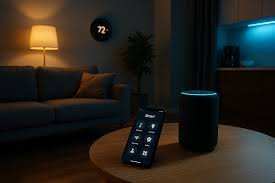
There was a time when the idea of a “smart home” felt a bit like science fiction. Lights that respond to your voice, doors you can lock from miles away, air conditioners that adjust themselves before you even walk in—it all sounded impressive, but distant.
Now, it’s quietly becoming normal.
Walk into a newly built apartment or even a renovated house, and you’ll probably find at least one smart feature. Maybe it’s just a voice-controlled bulb. Or maybe it’s a full system—security, lighting, appliances—all connected, all responsive.
But here’s the interesting part: buyers today aren’t just impressed by smart homes anymore. They’re starting to expect them.
The Shift From Luxury to Lifestyle
A few years ago, smart home tech was seen as a luxury add-on. Something extra. A bonus feature you’d show off to guests.
Now, it’s slowly turning into a lifestyle choice.
People want convenience, sure. But they also want control. The ability to manage their home remotely, automate daily routines, and feel a sense of efficiency in how things work.
And once you get used to it—even something small like scheduling your lights—it’s hard to go back.
Smart Homes Technology: Buyers kya expect kar rahe hain
This question is popping up more often, especially among developers and real estate professionals trying to stay relevant.
The answer isn’t just “more technology.” It’s smarter, more intuitive technology.
Buyers don’t want complicated systems that need constant tweaking. They’re looking for simplicity. Devices that work seamlessly together, apps that don’t feel like a puzzle, setups that don’t require a manual every time something goes wrong.
In short—they want tech that fades into the background.
Security Still Comes First
If there’s one area where smart homes truly stand out, it’s security.
Smart cameras, motion sensors, video doorbells—these aren’t just fancy gadgets anymore. They provide a sense of reassurance. Whether you’re at work, travelling, or just upstairs, you can keep an eye on things.
And in urban environments, where safety concerns are always somewhere in the back of your mind, that matters.
Buyers are increasingly prioritising these features, not because they’re trendy, but because they feel necessary.
Energy Efficiency Is a Quiet Priority
Another expectation that’s growing, almost quietly, is energy efficiency.
Smart thermostats, automated lighting, appliances that optimise power usage—they all contribute to lower electricity bills. But beyond savings, there’s also a growing awareness around sustainability.
People don’t always talk about it directly, but it influences decisions.
A home that helps you reduce waste, even in small ways, feels… thoughtful.
Integration Over Isolation
One common frustration with early smart home setups was fragmentation. Different devices, different apps, nothing really talking to each other.
Buyers today are more aware of this.
They’re not just asking, “Does this home have smart features?” but “Do these features actually work together?”
Integration has become a key expectation. A system where lighting, security, and appliances connect smoothly—where one action can trigger multiple responses.
It’s less about individual gadgets and more about the ecosystem.
Ease of Use Matters More Than Ever
Here’s something developers sometimes overlook: not everyone is tech-savvy.
A smart home shouldn’t feel like managing software. It should feel intuitive.
Voice commands, simple interfaces, minimal setup—these things make a huge difference. Buyers don’t want to spend hours figuring out how to turn on a light or adjust settings.
If it’s not easy, it won’t get used. And if it doesn’t get used, it loses value.
The Emotional Side of Smart Living
This might sound a bit abstract, but smart homes also tap into something emotional.
There’s a sense of comfort in coming back to a well-lit home, in having your environment adjust to your preferences without effort. It’s subtle, but it changes how you experience your space.
It’s not just about convenience—it’s about how a home feels.
Challenges That Still Exist
Of course, it’s not all perfect.
Cost is still a factor, especially for fully integrated systems. There are also concerns around data privacy—who has access to your information, how it’s being used.
And then there’s the issue of maintenance. Technology evolves quickly, and systems can become outdated faster than traditional home features.
These are real considerations, and buyers are becoming more aware of them.
Where It’s All Heading
Smart homes aren’t a passing trend. They’re evolving.
As technology improves, systems will likely become more affordable, more integrated, and easier to use. What feels advanced today might feel standard in a few years.
And that’s usually how innovation works—it becomes invisible over time.
A Final Thought
At the end of the day, a home is still a personal space. A place to rest, to reset, to live.
Technology can enhance that experience, but it shouldn’t complicate it.
Maybe that’s what buyers really expect—not just smarter homes, but better ones. Homes that understand their needs, adapt quietly, and make everyday life just a little bit easier.
And if smart technology can do that without getting in the way, then it’s doing something right.
