Table Of Contents
- Recognize the Signs of a Tire Blowout
- Keep Control of the Vehicle
- Move to a Safer Stopping Place
- What to Do After the Vehicle Stops
- Change the Tire or Call for Help?
- Check for Hidden Vehicle Damage
- Reduce the Risk of Another Blowout
- Build a Practical Roadside Safety Kit
- Common Tire Blowout Questions
A tire blowout can turn an ordinary drive through Williston into a stressful emergency in seconds. Whether you are traveling on a busy highway, heading out on a gravel road, or hauling equipment during a North Dakota workday, the priority is the same: keep the vehicle controlled, slow down smoothly, and get to a safer place away from traffic. If the tire needs professional attention after you stop, arrange flat tire repair Williston, ND rather than risking a roadside repair in an unsafe location.
Wind, changing weather, rough shoulders, debris, potholes, and long stretches between services can make tire trouble especially challenging around Williston. A calm response matters more than a fast response. Knowing what to do before a blowout happens can help drivers protect themselves, their passengers, and everyone sharing the road.
Recognize the Signs of a Tire Blowout
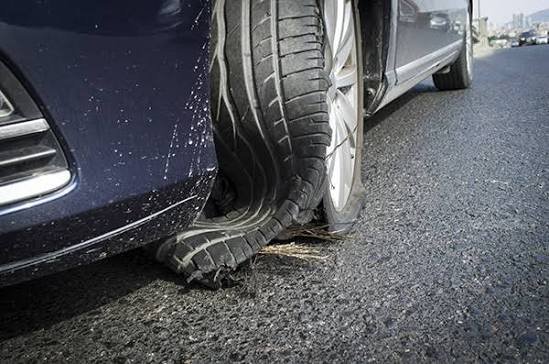
A blowout is a rapid loss of tire air pressure. You may hear a loud pop, repeated thumping, or a flapping sound. The vehicle may pull toward one side, vibrate sharply, or feel unusually heavy through the steering wheel. A front-tire failure often shows up in the steering, while a rear-tire failure may be felt more through the seat or body of the vehicle.
Not every tire problem is sudden. A slow leak can cause a gradual pull, softer handling, or a tire-pressure warning. Treat any new vibration, pull, or warning light seriously, especially before a longer trip outside Williston.
Keep Control of the Vehicle
The first few moments are about avoiding panic and abrupt inputs. Federal tire-safety guidance for a blowout advises drivers to hold the wheel with both hands, avoid slamming on the brakes, gradually release the accelerator, and steer as needed to stabilize the vehicle.
- Grip the steering wheel firmly with both hands.
- Keep the vehicle aimed in its lane or intended direction.
- Do not jerk the wheel or make a sudden lane change.
- Ease off the accelerator gradually once the vehicle is stable.
- Let the vehicle slow down before attempting to pull over.
- Use gentle braking only after the vehicle is tracking straight and slowing.
Move to a Safer Stopping Place
Once control is regained, look ahead for the safest available stopping area. A wide shoulder, parking lot, approach road, or other space away from moving vehicles is usually better than stopping in a live lane. Turn on hazard lights when you can do so safely, but do not focus on switches or your phone before stabilizing the vehicle.

On a high-speed road, do not continue farther than necessary on a damaged tire just to reach a preferred location. Driving on a flat tire or a damaged wheel can worsen the damage. If road conditions are poor, checking North Dakota 511 road conditions before travel can help drivers prepare for closures, weather, and difficult routes.
What to Do After the Vehicle Stops
- Shift into park and set the parking brake.
- Keep the hazard lights on.
- Check traffic carefully before opening any door.
- Keep passengers away from the traffic side of the vehicle.
- Call 911 if there is an injury, crash, fire, or immediate danger.
- Share an accurate location using a mile marker, a cross street, a nearby business, or a GPS pin.
If the vehicle is stopped in slow traffic, personal safety takes precedence over inspecting the tire. Stay alert for passing vehicles, especially in darkness, blowing snow, rain, or limited visibility.
Change the Tire or Call for Help?
Changing a tire is not always the safest option. Narrow shoulders, uneven ground, soft gravel, severe weather, heavy traffic, or a large pickup or work vehicle can make lifting the vehicle risky.
Changing the Tire May Be Reasonable When:
- The vehicle is well away from traffic on firm, level ground.
- You have a properly inflated spare, the correct jack, and a lug wrench.
- You know the manufacturer-approved jacking points for the vehicle.
- Weather and visibility allow you to work safely.
Calling for Assistance May Be Safer When:
- The tire is shredded, separated, or has visible sidewall damage.
- The spare is missing, flat, damaged, or unsuitable for the vehicle.
- You are on an interstate, curve, bridge, steep grade, or narrow shoulder.
- You are carrying heavy cargo, towing, or are unsure how to use the jack safely.
Check for Hidden Vehicle Damage
After a severe tire failure, inspect more than the tire itself. Look for a bent wheel, damaged valve stem, torn fender liner, loose trim, fluid leaks, or damage near suspension and brake components. Check the other tires for cuts, bulges, exposed cords, cracking, or unusual wear.
If the vehicle shakes, pulls, makes new noises, or feels unstable after a spare is installed, do not assume the problem is solved. A qualified inspection can identify damage that is not obvious from a quick roadside look.
Reduce the Risk of Another Blowout
- Check tire pressure, including the spare, when tires are cold.
- Use the pressure listed on the driver-side door label or in the owner’s manual.
- Inspect tread and sidewalls monthly and before longer trips.
- Replace tires with cuts, bulges, exposed cords, severe cracking, or unsafe wear.
- Stay within vehicle load and towing limits.
- Slow down for potholes, debris, curbs, and rough road edges.
- Schedule an inspection after a hard pothole strike or curb impact.
Build a Practical Roadside Safety Kit
A simple kit can make an unexpected stop more manageable. Keep a charged phone and vehicle charger, flashlight, reflective vest or bright outer layer, work gloves, tire-pressure gauge, correct jack and lug wrench, warning triangles or approved markers, water, basic first-aid supplies, warm layer or blanket, and emergency contacts in the vehicle.
Common Tire Blowout Questions
Should a Driver Slam on the Brakes During a Blowout?
No. Sudden braking can make the vehicle harder to control. Focus first on steady steering, gradual accelerator release, and gentle braking only after the vehicle has stabilized.
Can a Vehicle Be Driven After a Tire Blowout?
Only as far as needed to reach a safer stopping place, if the vehicle remains controllable. Continuing to drive on a damaged tire or wheel can create more damage.
Does a Tire-Pressure Monitoring System Prevent Blowouts?
No. It can warn about significantly low pressure, but it cannot prevent every sudden failure or replace regular tire inspections.
Final Safety Reminders
A tire blowout in Williston, North Dakota, can feel sudden, but the response should be deliberate. Hold the wheel firmly, avoid abrupt braking, slow down gradually, and pull over only when it is safe. Once stopped, choose the safest repair option, inspect for related damage, and keep tire maintenance part of every season’s driving routine.
