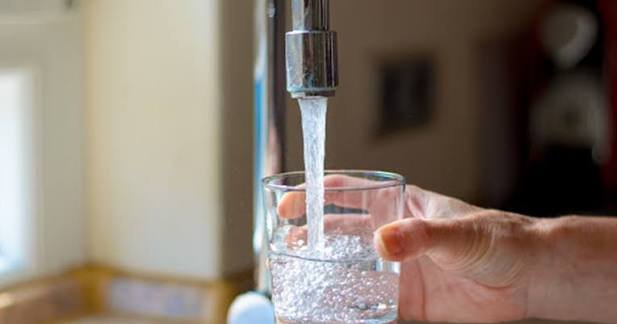
Water has a funny way of becoming invisible in our daily routines. We use it from the moment we wake up, but we rarely think about it until something seems wrong.
Maybe the kitchen tap has started producing water with an odd taste. Perhaps your showerhead is covered in mineral deposits, or your freshly washed clothes don’t feel quite as soft as they used to. Sometimes the signs are obvious. Other times, they’re subtle enough to ignore.
But when these little problems keep happening, it’s worth asking a bigger question: is your home’s water getting the kind of treatment it actually needs?
The answer isn’t always another filter under the kitchen sink. Depending on your water source and its characteristics, treating the entire home’s water supply may be a more practical approach.
Start by Finding Out What’s in Your Water
Before buying any equipment, understand what you’re dealing with.
Water quality can vary significantly depending on whether your home receives municipal water or relies on a private well. Local geology, plumbing, seasonal changes and the original water source can all influence its characteristics.
A professional water test can provide useful information about hardness, pH, sediment, minerals and other measurable factors.
This step might seem unnecessary when the water looks perfectly clear. It isn’t.
Clear water isn’t necessarily an indication that every aspect of its quality is ideal. At the same time, an unusual taste doesn’t automatically mean the water is unsafe. Testing helps separate assumptions from facts.
And once you know the actual issue, choosing treatment becomes much easier.
Why Treating Water at the Entry Point Can Make Sense
Many homeowners think about water treatment only in terms of drinking water.
That’s understandable. The kitchen faucet is where we notice taste and odor most directly.
But think about how much water the rest of your house uses.
You shower with it. You wash clothes with it. You run the dishwasher, brush your teeth, clean dishes and use water in countless other everyday tasks.
If a water-quality concern affects the whole property, treating water at the point where it enters the home can be a convenient strategy.
A whole-house system can treat water before it travels through the plumbing, giving multiple fixtures access to the same treatment process.
That doesn’t mean every home needs a whole-house system. It simply means the broader household should be considered before making the decision.
Drinking and Bathing Water Have Different Priorities
Your family may care most about taste at the kitchen sink, but water quality can influence other everyday experiences too.
For example, hard water can leave mineral deposits around showerheads and faucets. It may also make soap more difficult to rinse away, leaving skin feeling different after a shower.
For families concerned about drinking and bathing water, a whole-home approach can sometimes offer greater convenience than installing separate filters at several fixtures.
However, treatment needs to match the problem.
A water softener is designed to address hardness minerals such as calcium and magnesium. A carbon filter may help with certain taste and odor concerns. Reverse osmosis is often used for more intensive drinking-water treatment.
One technology doesn’t automatically replace another.
Hard Water Is Often the Culprit
Hard water is one of the most common reasons homeowners investigate treatment systems.
The minerals responsible for hardness aren’t necessarily obvious when you pour a glass of water. Instead, they tend to reveal themselves gradually.
White scale appears around faucets. Shower doors become harder to keep spotless. Glassware comes out of the dishwasher covered with spots. Soap doesn’t seem to behave quite the way it should.
A water softener can help reduce hardness minerals and the scale associated with them.
But again, testing should come first.
If your water isn’t particularly hard, installing a softener may not provide much benefit. On the other hand, if hardness is significant, softening could make a noticeable difference throughout the home.
Choosing the Right Filtration Technology
There are many water treatment technologies, and each one has a specific purpose.
Sediment filters can capture particles. Carbon filtration may improve certain taste and odor issues. Reverse osmosis systems can provide more intensive treatment for drinking water. Specialized technologies may be appropriate for specific water-quality concerns.
The important thing is not to buy equipment simply because it has more stages.
More filtration doesn’t automatically mean better water.
Instead, look for equipment that is designed to address the characteristics identified in your water test. Check manufacturer specifications and relevant certifications, particularly when a system makes claims about reducing specific substances.
A straightforward system that solves the actual problem is usually better than a complicated one that doesn’t.
What About Well Water?
Private wells deserve particular attention because homeowners are responsible for monitoring their own water supply.
Well-water characteristics can vary depending on local geology and other environmental factors. Some properties may experience hardness, sediment, iron, manganese or other concerns.
Regular testing is especially important when relying on a private well.
The appropriate treatment depends on what the testing reveals. There isn’t a single “well water filter” that works perfectly for every property.
This is where professional assessment can be helpful. Someone familiar with water treatment can interpret test results and explain which technologies are appropriate.
Don’t Ignore Your Appliances
Your water interacts with more than just your body.
Water heaters, washing machines, dishwashers, coffee makers and other appliances all depend on the household water supply.
Hardness and mineral deposits can create scale over time. Sediment may also become problematic in certain situations.
Good water treatment won’t eliminate the need for appliance maintenance, but addressing known water-quality issues can be part of protecting the equipment you depend on.
It’s one of those things that seems minor until an appliance stops working.
A little prevention can go a surprisingly long way.
Installation and Maintenance Matter
Even excellent equipment needs proper installation.
Whole-house treatment systems can involve connections to the main water line, drains, valves and pressure considerations. Incorrect installation can lead to leaks or performance problems.
Professional installation can also help ensure that the system is correctly sized for your household.
After installation, maintenance becomes the next priority.
Filters need replacing. Softening systems require routine care. Reverse osmosis membranes and cartridges eventually need attention.
Before purchasing a system, ask about replacement schedules, maintenance costs and service availability.
Knowing these details ahead of time makes ownership much easier.
Don’t Choose a System Just Because It’s Expensive
It’s easy to assume that the most expensive system must be the best.
That’s not necessarily true.
The right equipment depends on your water, household size, usage patterns and treatment goals. A small family with one specific drinking-water concern may need something very different from a large household with hard water throughout the property.
Compare systems based on performance, capacity, maintenance, installation requirements and long-term costs.
Price matters, but value matters more.
Better Water Starts With Better Information
Water treatment doesn’t need to become an overwhelming home-improvement project.
Start with testing. Understand the results. Identify what actually bothers you about the water and what needs to be addressed.
Then decide whether point-of-use filtration, whole-home treatment, softening or a combination makes sense.
Don’t be afraid to ask questions. A good water-treatment professional should be able to explain the recommendation clearly without drowning you in technical jargon.
Once the right system is installed and maintained properly, it should become almost invisible.
You turn on the faucet. Fill your glass. Take a shower. Start the laundry.
Life carries on, while the system quietly does its job in the background. And really, that’s what good home water treatment should feel like—less worry, fewer little annoyances, and water that works better for everyday life.
