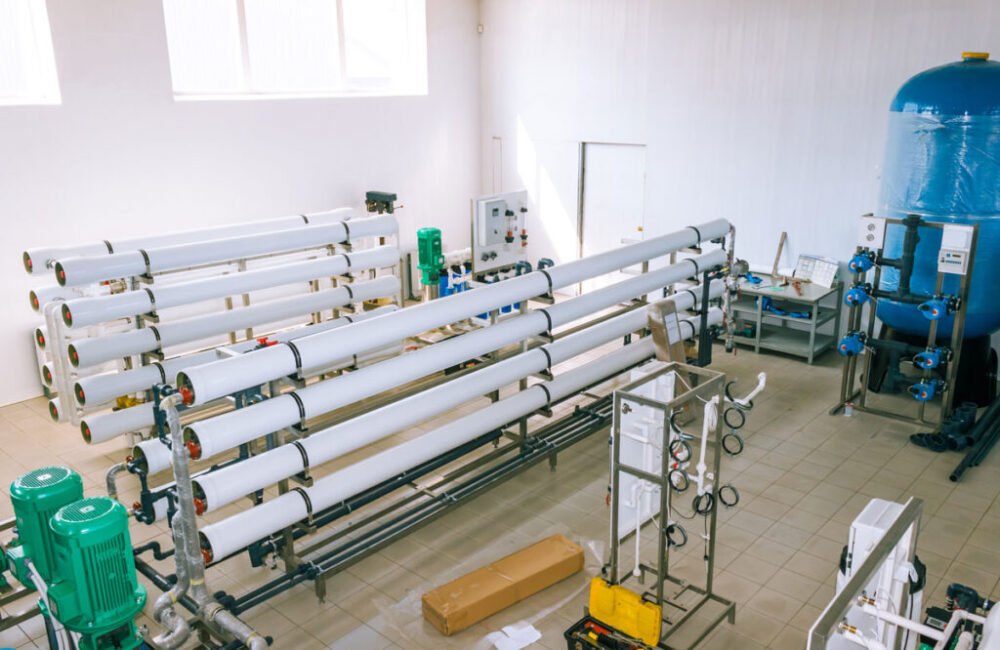
A multi-stage reverse osmosis process is designed to treat water in several steps rather than relying on a single filter. Each stage has a specific job. Water may first pass through sediment filtration to capture particles, followed by carbon filtration to reduce chlorine, odors, and certain organic compounds. It then reaches the reverse osmosis membrane, where many dissolved impurities are reduced before the water moves through final treatment stages.
The Role of Pre- and Post-Filtration
The membrane is one of the most important components of an RO system, but it works best when supported by other filtration stages. Pre- and post-filtration help protect the membrane and improve the finished water.
Pre-filters remove sediment and certain chemicals before water reaches the membrane. This can reduce the burden placed on the membrane and help maintain consistent performance. After the RO stage, post-filtration can provide another layer of treatment, often focusing on taste and odor before the water reaches the dedicated drinking faucet.
It’s a little like preparing food: the main ingredient matters, but the preparation steps can make a huge difference to the final result.
Why Detailed Water Analysis Comes First
Not every home has the same water-quality concerns. Groundwater, municipal supplies, and other sources can have very different characteristics. That’s why a detailed water analysis is an important starting point before choosing an RO system.
Testing can help identify hardness, dissolved solids, chlorine, sediment, iron, and other water-quality characteristics. With that information, a water professional can determine which treatment stages are appropriate and whether additional equipment may be useful.
Instead of guessing which system is best, homeowners can make a decision based on what is actually present in their water.
Choosing a System for Real-World Needs
A quality RO system should do more than produce purified water. Consider its filtration stages, membrane performance, replacement-filter availability, maintenance requirements, water efficiency, and overall capacity.
Household size matters, too. A couple who primarily uses filtered water for drinking and cooking may have very different requirements from a larger family that consumes several gallons every day.
The goal isn’t to install the most elaborate system possible. It’s to create a treatment setup that matches the water quality and the household using it.
A Smarter Approach to Better Drinking Water
Reverse osmosis can be a powerful part of a home water-treatment strategy, particularly when it is paired with suitable pre- and post-filtration. But the most effective solution begins with understanding the water itself.
Test first, identify the actual concerns, and then choose treatment equipment accordingly. That approach can help avoid unnecessary filtration stages while ensuring important water-quality issues aren’t overlooked. In the long run, a properly designed system can provide cleaner, better-tasting drinking water without turning water treatment into a guessing game.
